


Vietnam's competitive advantage in medical tourism over Thailand, Malaysia, and Singapore.
Medical tourism in Southeast Asia is entering an increasingly competitive phase. Thailand, Malaysia, and Singapore are three markets that have established significant positions in the region, but each country has chosen a different development path. For Vietnam, it is necessary to identify market gaps and advantages that can be developed into a unique direction.
Vietnam and Thailand: Competing not only in treatment, but also in experience.
Thailand is one of the earliest and most successful medical tourism markets in Asia. The country has built a strong international image for its health and wellness services, particularly through its private hospital system, healthcare facilities, international clientele, and developed tourism industry.
Thailand's strengths lie not only in its medical capabilities. One of the factors that attracts international patients is its ability to transform the treatment process into an all-inclusive experience. Patients can come to Thailand for treatment while simultaneously relaxing, shopping, sightseeing, or enjoying comprehensive healthcare services.
This is an advantage that Vietnam has the opportunity to learn from. Vietnam also possesses a diverse tourism industry with Hanoi, Ha Long, Ninh Binh, Da Nang, Hoi An, Nha Trang, Ho Chi Minh City, Phu Quoc, and many other destinations. If well-connected with hospitals, hotels, transportation, and healthcare services, Vietnam can absolutely build similar itineraries with its own unique identity. The key difference lies in the maturity of the ecosystem. Thailand has spent many years building its Medical Tourism brand and establishing a preferred choice for international patients. Vietnam does not yet have a comparable brand advantage, but it has enormous potential for development.

Vietnam and Malaysia: Opportunities are not just about price.
Malaysia is a closer competitor to Vietnam in terms of cost competitiveness. For many years, Malaysia has developed medical tourism based on a combination of quality healthcare, reasonable costs, the ability to serve international patients, and supportive government policies.
One notable aspect of Malaysia is its establishment of a national-level mechanism for promoting medical tourism through the Malaysia Healthcare Travel Council (MHTC). This helps Malaysia not only promote individual hospitals but also promote Malaysia as a healthcare destination.
This is an important lesson for Vietnam. If each hospital is left to its own devices to reach international patients, Vietnam's visibility in the global market will be fragmented. A foreign patient might know about a particular hospital or doctor, but they may not necessarily form the perception that Vietnam is a medical tourism destination.
Furthermore, Vietnam possesses several advantages that could differentiate it, such as the cost of medical care, accommodation, and related services. However, relying solely on low prices to compete with Malaysia could easily lead to a cost-driven race, hindering the creation of long-term value. Instead, Vietnam could create an advantage by offering a comprehensive package of services. A patient visiting Vietnam isn't just buying a single treatment. They can simultaneously utilize services such as examination and treatment, accommodation, transportation, interpretation, rehabilitation, convalescence, and post-treatment care. When these services are interconnected, the total cost of a healthcare journey in Vietnam can become more attractive to international patients, while the value received is not simply measured by the cost of a single medical procedure.

Vietnam and Singapore: Competition in the highest-end segment isn't necessary.
While Thailand excels in its tourism-medical ecosystem and Malaysia boasts cost competitiveness, Singapore builds its position heavily on high-quality healthcare, technology, expert teams, facilities, and specialized treatment capabilities. This is a market where Vietnam would find it difficult to compete directly in all aspects. Singapore has a strong international healthcare brand and is chosen by many patients for cases requiring high expertise, modern technology, or complex treatment. Healthcare costs in Singapore are also significantly higher than in Vietnam.
Therefore, Vietnam doesn't necessarily need to aim to become a "lower-cost Singapore." A more appropriate approach is to identify patient segments where patients don't necessarily need to go to the most expensive medical centers but still require quality expertise, safety, and reliable service.
This is an area where Vietnam can thrive. Services such as dentistry, ophthalmology, health checkups, rehabilitation, musculoskeletal care, geriatrics, aesthetics, and certain specialized treatments could become areas where Vietnam can build a competitive advantage. Instead of competing with Singapore on top-tier medical technology, Vietnam can compete on the value received throughout the entire journey. Patients can access highly qualified doctors, well-invested medical facilities, more reasonable costs, and more options for accommodation, rehabilitation, and recovery.
If Singapore represents a model of high-end healthcare services, Vietnam has the opportunity to build an image of quality healthcare with better overall value. This is not about competing by negating Singapore's advantages, but rather about choosing a different position in the regional medical tourism value chain.

Source: Suc khoe & Doi song Newspaper
Three markets – three directions and a gap for Vietnam
Thailand, Malaysia, and Singapore have all accumulated advantages over the years. Vietnam will need time to build its brand, standardize services, and build trust with international patients. Looking at the three markets, each country has a relatively clear position. Thailand has built its strength on medical tourism linked to tourism, recreation, and international services. Malaysia thrives on a combination of reasonable costs and an organized medical tourism support system. Singapore focuses on the high-end, specialized medical segment, technology, and quality brands.
However, being a latecomer also creates another opportunity: Vietnam can observe successful models in the region, select suitable elements, and build a new model that better suits its strengths.
If competing with Thailand, Vietnam needs to enhance the patient experience and connect healthcare with rehabilitation, convalescence, and cultural experiences in its own unique way. If competing with Malaysia, Vietnam needs to transform its cost advantage into a higher-value service ecosystem instead of simply competing on price. If competing with Singapore, Vietnam needs to clearly identify segments where professional quality and cost-effectiveness can create more attractive value for patients.
In this context, Vietnam does not necessarily have to choose one of the three models to replicate. Vietnam can build its position at the intersection of its advantages:
High-quality healthcare - competitive costs - diverse travel options - healthcare workforce - personalized experiences - fully coordinated travel.
This could be the direction that helps Vietnam carve out its own position on the Asian medical tourism map: not the cheapest destination, not necessarily the most luxurious, but a destination that offers comprehensive, convenient, and reliable value for international patients.
In the increasingly competitive medical tourism landscape of Southeast Asia, the crucial question for Vietnam is no longer "How to become the next Thailand, Malaysia, or Singapore?" but rather "How can Vietnam become a medical tourism destination that no other country can replace?"
This forms the foundation for Vietnam to build a long-term competitive advantage in the new phase of medical tourism.
You may also like

Medical Tourism Trends in Asia and Opportunities for Vietnam
In recent years, Medical Tourism has become one of the fastest-growing sectors of the global tourism industry. As the demand for high-quality healthcare continues to increase alongside a growing focus on proactive h...
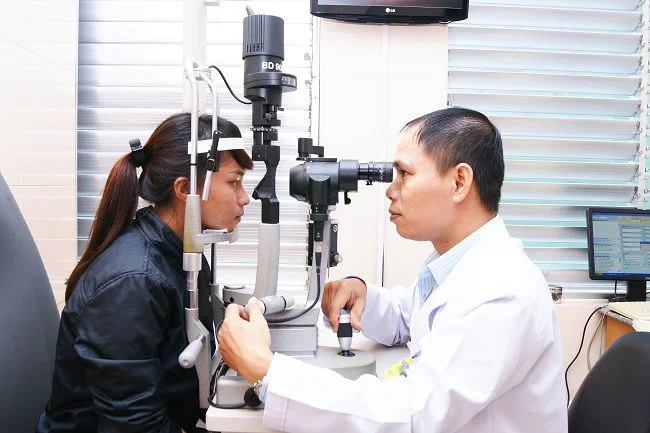
The journey of eye examination and treatment in Vietnam – A complete guide from preparation to return home.
A journey for eye examination and treatment is not just a few hours at the hospital, but involves many carefully planned and interconnected stages, from before departure to the patient's return home. With a team of exper...