

The journey of eye examination and treatment in Vietnam – A complete guide from preparation to return home.
A journey for eye examination and treatment is not just a few hours at the hospital, but involves many carefully planned and interconnected stages, from before departure to the patient's return home. With a team of experienced ophthalmologists, a modern hospital system, and competitive treatment costs, Vietnam is gradually asserting its position as a potential destination in the field of medical tourism. Beyond providing quality examination and treatment services, Vietnam also facilitates a convenient healthcare journey for patients, combining rest and recovery in a safe and comfortable environment.
Before treatment – Get fully prepared for a smooth journey.
The first step in the journey is to understand your eye health and develop a suitable treatment plan. Before coming to Vietnam, patients can send previous examination results, prescriptions, or share their current symptoms so that doctors can get an overall picture of their vision.
Through online consultations, doctors will conduct a preliminary assessment, answer initial questions, and advise on suitable examination or treatment options. This helps patients be more proactive in preparing their time and finances, as well as choosing the right time to travel.
After finalizing the plan, appointments will be scheduled in advance to minimize waiting times at the hospital. Simultaneously, related travel services such as airport pick-up and drop-off, transportation, hotel accommodation, interpretation services, and other necessary support can also be arranged accordingly. Early planning provides patients with greater peace of mind, especially those visiting Vietnam for treatment for the first time.
During treatment – Accurate diagnosis and selection of appropriate methods
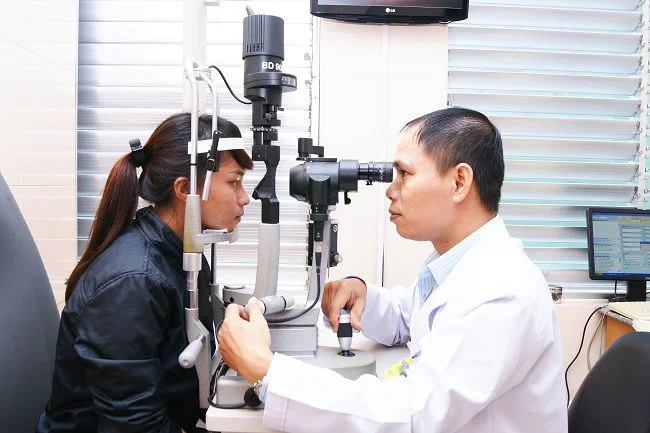
Upon arrival at the hospital, patients will undergo a full range of in-depth examinations according to ophthalmological procedures. Depending on the case, the doctor may order visual acuity testing, refraction testing, intraocular pressure measurement, fundus photography, optical coherence tomography (OCT), corneal evaluation, lens examination, and other necessary tests.
Based on the examination results, the doctor will provide detailed advice on the eye condition, explain the causes of vision impairment, and suggest a treatment plan suitable for each patient. Each person will have a personalized treatment plan depending on their age, health status, and the use of their vision in work and life.
For routine eye checkups, the examination process is usually quick, and patients can receive results on the same day. For more specialized procedures such as refractive error correction with LASIK, SMILE Pro, or Phakic ICL, cataract surgery, glaucoma treatment, or other retinal diseases, the entire process will be clearly explained by the doctor before proceeding.
Throughout the treatment process, the medical team closely monitors the patient's condition, provides instructions on medication use and eye care, and answers questions to ensure the patient feels at ease before, during, and after the procedure or surgery.
Source: Sai Gon Eye Hospital
3. Post-treatment – Monitoring results and vision care
After treatment is complete, patients will continue to be monitored to assess the eye's recovery. Follow-up appointments allow the doctor to check vision, monitor the healing of the cornea or surgical wound (if any), and adjust medication or provide care instructions as needed.
This is a crucial stage because the treatment outcome depends not only on the doctor's technique but also on the patient's adherence to post-treatment instructions. Patients will receive detailed advice on rest, eye hygiene, proper use of eye drops, and when they can read, use electronic devices, drive, or return to work.
Close monitoring in the early days helps detect any abnormalities early, ensuring a safe and optimal recovery process.
4. Recovery and Wellness – Experience Medical Tourism in Vietnam
Unlike traditional treatment methods, medical tourism offers patients the opportunity to receive healthcare while also enjoying a relaxing vacation after treatment.
After their condition is confirmed stable by a doctor, patients can rest at a hotel or resort with a quiet, comfortable environment suitable for recovery. Gentle activities such as enjoying local cuisine, visiting cultural destinations, relaxing by the beach or in green spaces will help patients feel more comfortable during their recovery.
Combining treatment and relaxation not only helps reduce stress but also creates a positive experience, transforming a health trip into a memorable journey in Vietnam.
Source: Tuoi Tre Newspaper
5. Return to your home country – Ongoing care after the trip
After completing treatment and meeting the eligibility requirements to return home, patients will be provided with complete medical records, examination results, medication instructions, and a post-treatment follow-up plan.
In many cases, care doesn't end when the trip concludes. Patients can continue to communicate with their doctor through online consultations, receive updates on their recovery, or get guidance as needed. This ensures continuous monitoring, especially for patients living abroad.
The connection between patients and the medical team after treatment contributes to improved long-term treatment effectiveness and provides peace of mind throughout the recovery process.
You may also like
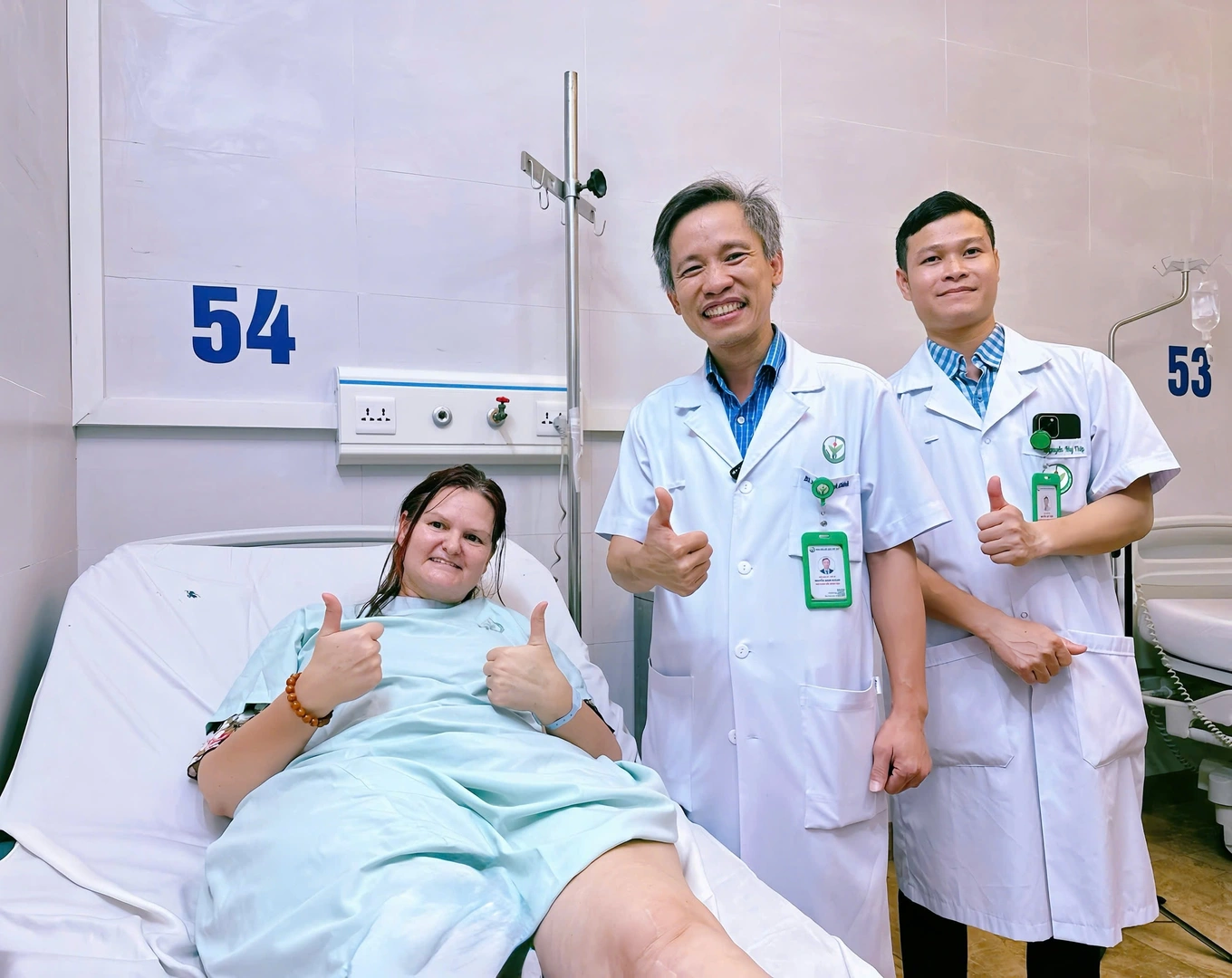
A New Zealand patient traveled over 9,000 km to Vietnam for treatment – A positive sign for Vietnam's medical tourism.
On July 26, 2026, Viet Duc Friendship Hospital reported on the case of a 51-year-old female patient from New Zealand who chose to come to Vietnam for hip replacement surgery after years of enduring persistent pain and wa...

Why are more and more international patients choosing Vietnam?
Amidst rising global healthcare costs and the increasing demand for cross-border healthcare, Vietnam is gradually becoming a destination of interest to many international patients. Not only are Vietnamese people living a...